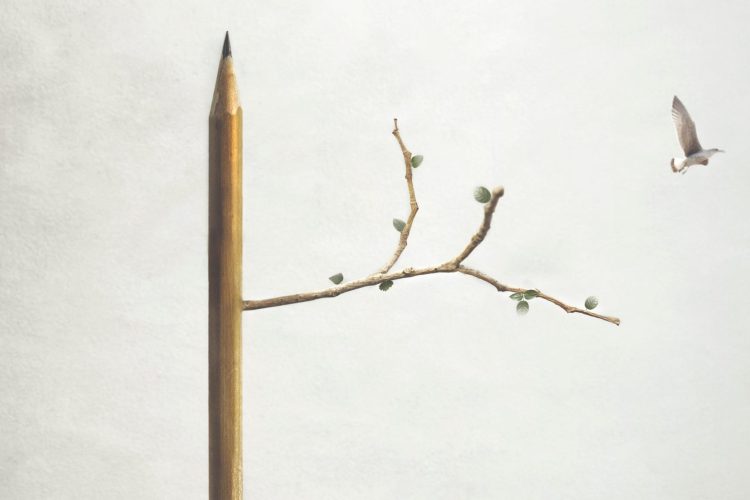
Writing in Pursuit of Truth
Sooner or later, most of us encounter questions that deserve more attention than everyday life usually allows.
Some arrive through loss.
Others through love.
A new opportunity.
A difficult decision.
A story we long to write.
A season of transition.
A changing belief.
A growing business.
A quiet success that somehow leaves us wondering:
What now?
The questions themselves are different.
But they share something in common.
They rarely become clearer by rushing.
Often, they appear when the story we expected, inherited, or have been telling ourselves no longer fully explains the life in front of us.
The Pencil-Driven Life is a place to slow down.
To notice more carefully.
To question honestly.
To see more clearly.
And to make one honest mark before deciding what comes next.
This is not writing for performance.
It is writing as a way of paying attention.
You do not need to arrive here with certainty.
Only a willingness to look honestly at the stories you read, write, inherit, and live.
Bring one real question.
The pursuit begins there.
Why a Pencil?
A pencil is different from a pen.
A pen assumes permanence.
A pencil assumes humility.
It asks questions before declaring answers.
It sketches before defining.
It erases without pretending the first attempt never existed.
It revises.
It begins again.
A pencil gives us permission to notice, question, and revise.
Not because every belief must be abandoned.
Not because every story must be rewritten.
But because no conclusion should be protected from honest examination.
The Pencil-Driven Life is not about certainty.
It is about paying honest attention to what is true—even when the truth surprises us.
Begin Here
Every part of this website grows from one simple practice:
Pick up a pencil.
Put one real question on paper.
Write one honest sentence.
The sentence does not have to settle the question.
It may simply name what you are beginning to notice.
From there, you can examine the assumptions beneath it, question the story you have been telling, and revise only when honesty requires it.
You do not have to solve anything today.
You only have to begin paying closer attention.
Begin with One Honest Mark.
One Pursuit, Different Doorways
Some people arrive here looking for a story to read.
Some are trying to write one.
Others are carrying a question because the story they are living no longer makes complete sense.
The Pencil-Driven Life offers several ways to enter the same pursuit.
Through fiction.
Through reflection.
Through conversation.
Through quiet.
Through the small but serious act of putting one honest sentence on paper.
These are not separate ventures.
They are different ways of paying attention to what it means to be human.
One Honest Story
A brief story. One real question. One honest mark.
Each day, enter one ordinary life at one particular moment.
A missed call.
An untouched coffee cup.
A few quiet minutes in a parked car.
The story may belong to someone else.
But something within it may help you recognize your own life more clearly.
Stories do more than entertain us.
They allow us to enter another person’s hopes, fears, assumptions, choices, and contradictions—and sometimes return with a clearer understanding of our own.
At the end, pick up a pencil and write one honest sentence.
Read
We are all living within stories—stories shaped by family, belief, place, love, loss, conflict, choice, and change.
Some of those stories were given to us before we were old enough to question them.
Some we chose.
Some remain true.
Others may need to be examined, revised, or released.
Writing helps us enter those stories more attentively.
My novels explore truth through imagined lives. My nonfiction approaches many of the same human questions through lived experience, reflection, and direct inquiry.
Most of my novels are set in the fictional town of Boaz, Alabama, where ordinary people confront questions about belief, family, justice, identity, responsibility, forgiveness, and the complicated stories we tell ourselves.
The forms are different, but the pursuit is the same:
To see more clearly what it means to be human.
The Pencil’s Edge
Books take time to write.
The Pencil’s Edge grows out of that writing life.
Here I share recognitions that emerge while writing novels, nonfiction, and One Honest Story—reflections about character, conflict, setting, belief, doubt, creativity, attention, revision, and the ordinary moments that quietly reshape our lives.
These essays do not offer protected conclusions.
They begin with something noticed.
A question raised.
An assumption examined.
Not a place of certainty.
A place of honest inquiry.
Every essay is also available as a short Audio Reflection on Spotify.
Work with Richard
Sometimes we need help seeing the story we are writing.
Sometimes we need help seeing the story we are living.
In either case, the goal is not to impose an answer.
It is to slow down, pay closer attention, and discover what the story itself may be asking us to notice.
Story Coaching
As a working novelist and certified Fictionary StoryCoach, I help fiction writers discover and strengthen the emotional truth already present within their stories.
Stories rarely become stronger by becoming more complicated.
They become stronger by becoming more honest.
Together, we examine character, conflict, structure, scene, and the deeper human question beneath the plot.
Not to make the story conform to a formula.
To help it become more fully itself.
Pencil Sessions
Private conversations for people navigating questions about life, writing, work, transition, belief, creativity, or simply feeling stuck.
The purpose is not for me to supply your answer.
It is to help you slow down long enough to see the question, the assumptions beneath it, and the possibilities around it more clearly.
Together, we pay attention to the story you are living and the honest mark that may need to come next.
Because clarity often begins with attention.
Step Away and Pay Attention
Modern life rewards speed.
Truth often asks us to do something different.
Reset Practice is the intentional decision to create enough space to notice what ordinary life keeps covering.
To walk.
To write.
To think.
To question.
To notice.
Sometimes that happens at home with nothing more than a notebook and a pencil.
Sometimes it happens during time away at Oak Hollow.
The goal is not escape.
It is not permanent withdrawal.
It is not forcing a dramatic answer.
It is creating enough quiet to recognize the story you are living, examine what you have accepted, and return to everyday life carrying one honest recognition.
Quiet is not the destination.
Attention is.
About Richard L. Fricks
I have spent my life wearing many titles—CPA, attorney, businessman, novelist, and StoryCoach.
Looking back, those chapters seem very different.
To me, they have all been part of the same lifelong pursuit:
Learning to recognize what is true.
Creating stories, conversations, and places where honest attention can begin.
I do not believe clarity comes from pretending we already know.
I believe it begins when we become willing to notice, question, and revise.
Welcome
You may have arrived through a novel.
An essay.
A story you are writing.
A question you have been carrying.
Or a growing recognition that the story you are living deserves another look.
However you arrived, welcome.
This is not a place that promises all the answers.
It is a place that believes honest attention is where clearer answers begin.
Pick up a pencil.
Bring one real question.
Make one honest mark.
Then see where it leads.
 The Pencil-Driven Life