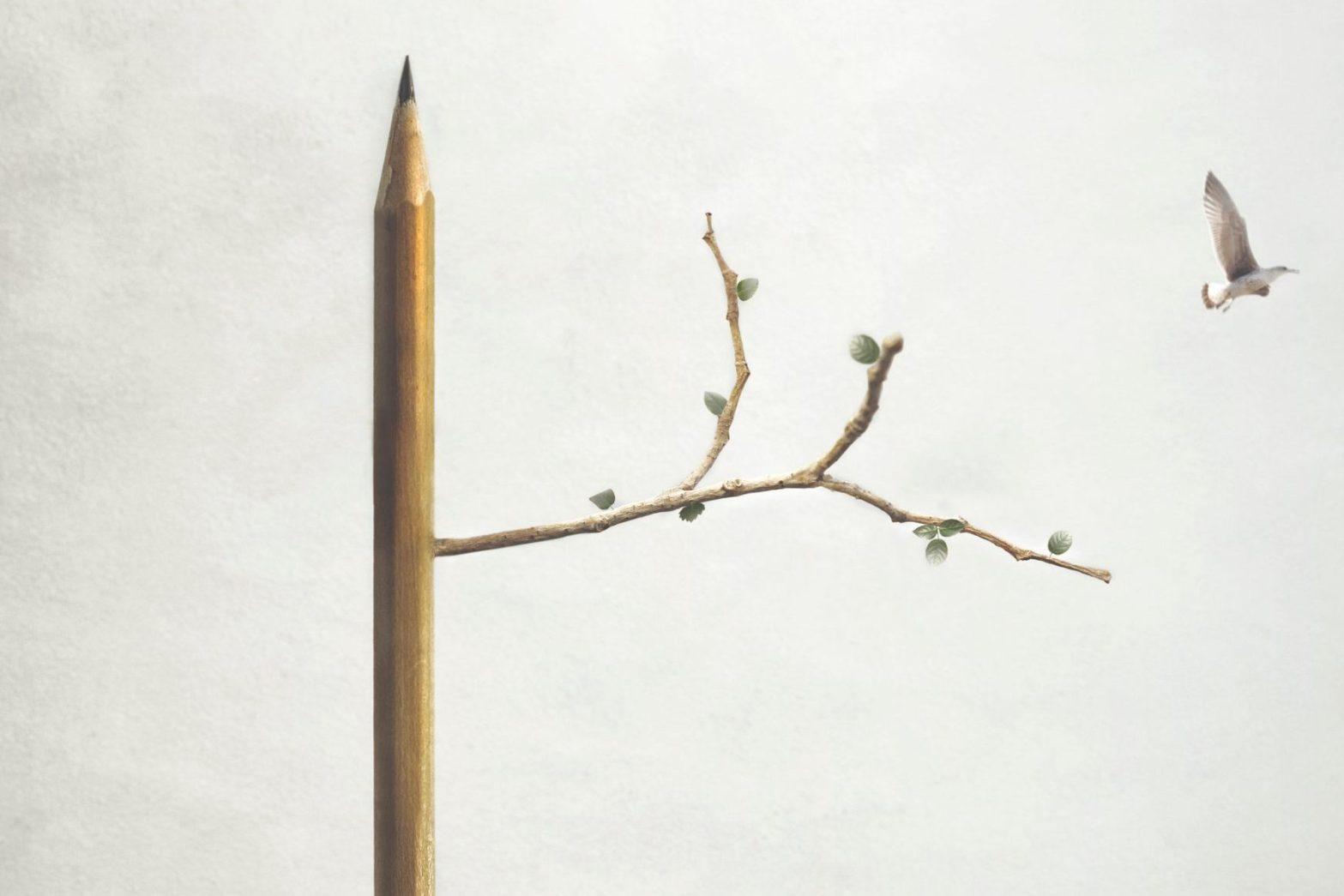
What part of your life did you inherit — and what part are you ready to examine?
Most of Us Do Not Think of Our Lives as Inherited
We think of inheritance as money, land, a house, a family Bible, a set of tools, a piece of furniture, a name, or a story passed down through the family.
But long before anyone leaves us property, they leave us marks.
They teach us what to believe.
They teach us what to fear.
They teach us what kind of person earns approval.
They teach us what questions are safe.
They teach us what success should look like.
They teach us what failure means.
By the time we are old enough to choose, much of the page has already been marked.
That does not mean every mark is bad.
Some inherited marks may still serve us. Some may be worth keeping, honoring, even darkening.
But some marks no longer fit.
Some were never truly ours.
Some were written out of fear, religion, family pressure, cultural expectation, ambition, shame, or the need to be seen as responsible, useful, respectable, obedient, successful, or right.
That is why this question matters:
What part of your life did you inherit — and what part are you ready to examine?
The Life We Call Ours
We often speak of “my life” as though we designed it from the beginning.
My beliefs.
My values.
My career.
My habits.
My priorities.
My fears.
My idea of success.
My idea of failure.
My sense of what is possible.
My sense of what is forbidden.
But how much of that did we actually choose?
Did we choose the religion we were handed as children?
Did we choose the family expectations that shaped our sense of duty?
Did we choose the town, region, class, church, school, and culture that taught us what a “good life” should look like?
Did we choose our earliest ideas about money, work, marriage, gender, education, ambition, rest, obedience, and respectability?
Usually, we did not.
We absorbed them.
We lived inside them.
We learned what was praised.
We learned what was punished.
We learned what questions were safe.
We learned what kind of person received approval.
We learned what kind of person got corrected, ignored, shamed, or pushed aside.
Before we knew it, we had a life.
Or at least we had the beginning of one.
But beginning with a life is not the same as consciously choosing one.
Inherited Purpose
One of the deepest things we inherit is purpose.
We may not call it that.
We may call it responsibility.
Calling.
Duty.
God’s will.
Family loyalty.
Being a good man.
Being a good woman.
Making something of ourselves.
Doing what is expected.
Being useful.
Being successful.
Being respectable.
Being the kind of person people approve of.
But underneath all those words is often the same message:
This is what your life is supposed to be for.
That message can come from religion.
It can come from parents.
It can come from school.
It can come from a profession.
It can come from a community.
It can come from poverty.
It can come from fear.
It can come from ambition.
It can come from comparison.
It can come from the need to prove that we are enough.
Sometimes inherited purpose gives structure to a life.
Sometimes it helps a person survive.
Sometimes it teaches discipline, service, persistence, responsibility, and care.
But sometimes inherited purpose quietly becomes a cage.
A person may spend years living a life that looks responsible from the outside while something inside keeps asking:
Is this really mine?
That question matters.
It may begin as a whisper.
It may appear during burnout.
It may appear after a death.
It may appear when a child leaves home.
It may appear after a belief collapses.
It may appear after retirement.
It may appear during a long drive, a quiet morning, a walk through the woods, or a moment when the old explanations no longer work.
It may appear as exhaustion.
It may appear as restlessness.
It may appear as grief.
It may appear as anger.
It may appear as a simple sentence:
I cannot keep living this way.
This Is Not About Rejecting Everything
The Pencil-Driven Life is not built on contempt for the past.
It is not about rejecting family.
It is not about mocking church.
It is not about abandoning duty.
It is not about treating every inherited mark as harmful.
That would be too easy.
And it would be false.
We all inherit things worth keeping.
A work ethic.
A love of place.
A sense of responsibility.
A respect for ordinary labor.
A habit of helping neighbors.
A capacity to endure difficulty.
A language.
A landscape.
A story.
A table.
A recipe.
A song.
A phrase our grandmother used.
A way of showing up when someone needs us.
The goal is not to erase the whole page.
The goal is to examine the marks.
Some marks may deserve to stay.
Some may deserve to be revised.
Some may deserve to be erased.
Some may need to be rewritten in our own hand.
That is why the pencil matters.
A pencil does not say, “Destroy everything.”
A pencil says, “Look closely.”
It says, “Make a mark.”
It says, “You can revise.”
It says, “Not everything written before you were conscious has to remain final.”
What Still Fits — and What No Longer Belongs?
If you are new to The Pencil-Driven Life, begin here:
What part of my life did I inherit?
Do not try to answer the question perfectly.
Do not turn it into a performance.
Do not write what you think you are supposed to write.
Take a pencil.
Open a notebook.
Write the question at the top of the page.
Then make a list.
You might write:
I inherited the belief that rest has to be earned.
I inherited the belief that questioning religion is dangerous.
I inherited the expectation that I should always be useful.
I inherited the fear of disappointing people.
I inherited the pressure to look certain even when I am not.
I inherited the belief that my worth depends on what I produce.
I inherited a definition of success that no longer fits.
You do not need to fix any of it yet.
Just notice it.
Write it down.
Let the marks become visible.
Then ask two quieter questions:
What still fits?
What no longer belongs?
This matters because The Pencil-Driven Life is not a rebellion machine.
It is a practice of attention.
Some inherited purposes may still belong.
Some inherited values may still be yours.
Some old marks may have become part of your chosen life.
You may still value responsibility.
You may still value kindness.
You may still value work.
You may still value family.
You may still value place.
You may still value service.
You may still value keeping your word.
The question is not whether something came from the past.
The question is whether it still belongs in your life now.
A mark can be inherited and still true.
A mark can be inherited and no longer fit.
A mark can be inherited and need revision.
The work is learning the difference.
The Voices That Defend the Old Marks
The marks that no longer belong may not leave quietly.
They may sound like responsibility.
They may sound like loyalty.
They may sound like faith.
They may sound like common sense.
They may sound like the voice of a parent, preacher, teacher, boss, spouse, community, or younger version of yourself.
They may say:
Who do you think you are?
You cannot change now.
People will misunderstand.
You will disappoint them.
You will look selfish.
You will lose your place.
You will not know who you are.
Those voices are powerful because they have been with us a long time.
But long presence is not the same as truth.
Sometimes the voice that feels most familiar is simply the one that arrived earliest.
A pencil gives us a way to listen without obeying too quickly.
We can write the voice down.
We can look at it.
We can ask:
Where did this come from?
What has it cost me?
What has it protected?
What would happen if I revised it?
What might become possible if this were no longer final?
Beginning Again Does Not Require Certainty
One of the reasons people stay inside inherited purpose is that change feels too large.
They imagine that revising a life means blowing everything up.
Leaving everything.
Rejecting everyone.
Explaining everything.
Knowing exactly what comes next.
But beginning again does not require certainty.
It does not require a five-year plan.
It does not require a dramatic announcement.
It can begin quietly.
With one mark.
One honest sentence.
One small refusal.
One new question.
One quieter morning.
One walk.
One page.
One cleared corner.
One old belief examined.
One obligation reconsidered.
One inherited purpose named.
This is not a performance.
It is a practice.
You notice.
You question.
You revise.
Then you notice again.
A Practice for This Week
Sometime this week, try this.
Take a pencil and a blank page.
Write:
What part of my life did I inherit?
Then list whatever comes.
Do not judge it.
Do not organize it.
Do not fix it.
Just notice.
Then choose one item from the list and ask:
Does this still fit?
Answer with one sentence:
This still belongs because…
Or:
This may no longer belong because…
Or:
I am not sure yet, but I am willing to look.
That is enough.
The Pencil-Driven Life does not ask you to change everything today.
It asks you to become honest about one mark.
Begin Again with a Pencil
Maybe the life you inherited still fits in many ways.
Maybe it does not.
Maybe you do not know yet.
That is all right.
You do not have to know everything before you begin.
You only have to become willing to look.
A pencil is humble.
It does not pretend to be final.
It makes a mark, and the mark can be revised.
So begin there.
With a pencil.
With a page.
With one question:
What part of my life did I inherit — and what part am I ready to examine?
Make one mark.
Then see what wants to come next.
Continue with The Pencil’s Edge
If this reflection gave you something to sit with, you are invited to continue in one of three simple ways.
Listen
A short audio reflection based on this essay is available below.
You can also listen to The Pencil’s Edge on Spotify.
Subscribe
Receive new essays and short audio reflections from The Pencil-Driven Life when they are published.
No noise.
No pressure.
Just the next honest mark.
Begin with a Pencil
Take a pencil.
Open a page.
Write one honest sentence from this reflection that stayed with you.
Then ask:
What is one small mark I can make today?

 The Pencil-Driven Life