For a long time, I had difficulty explaining how the different parts of my work belonged together.
There were my books and essays.
There was The Pencil-Driven Life Reset Guide.
There was One Honest Story.
There was West Hollow Cabin and The Meadow.
And there were the long-term residences at Oak Hollow: East Hollow and Oak Hollow Studio.
At times, these seemed like separate undertakings—some philosophical, some creative, some practical. Oak Hollow itself changed direction more than once as we tried to understand what the property could honestly offer.
I sometimes interpreted those changes as evidence that we had failed to decide what we were doing.
I see them differently now.
We were trying to discover the connection among a place, a process, and a basic human freedom:
The freedom to examine the life we have inherited.
Where The Pencil-Driven Life Began
The Pencil-Driven Life grew from my own willingness to question beliefs I had accepted long before I was capable of choosing them.
For most of my life, faith provided a framework for understanding purpose, identity, morality, suffering, and what a meaningful life was supposed to look like. I did not initially experience that framework as something inherited. It simply felt true.
Only later did I begin asking where those beliefs had come from, why I held them, and whether they could withstand honest examination.
That questioning eventually led to my deconversion, but deconversion is not the conclusion The Pencil-Driven Life asks anyone else to reach.
My conclusion does not have to become yours.
What mattered most was learning that an inherited belief could be examined. Something handed to us by family, church, school, work, culture, or community did not have to remain beyond questioning merely because it had been present for a long time.
That recognition extends far beyond religion.
We inherit ideas about success, money, work, marriage, gender, responsibility, productivity, family loyalty, grief, retirement, technology, and what makes a person worthy. We absorb definitions of a good parent, a dependable employee, a respectable neighbor, a successful adult, and a meaningful life.
Some of those inherited marks continue to serve us well.
Others may no longer fit.
The purpose is not to reject everything we inherited. It is to become conscious enough to choose what remains.
The Service Is Not an Answer
I have been thinking about whether The Pencil-Driven Life, West Hollow, and the Reset Guide provide a genuinely needed service.
I believe they do—but only if we are honest about what that service is.
The service is not a collection of answers.
It is not a promise of transformation.
It is not therapy, crisis care, religious instruction, or anti-religious instruction. It does not tell someone what to believe, which relationship to leave, which career to abandon, or how to rebuild an entire life.
The service is more modest and, I believe, more honest.
It is an opportunity to notice something that ordinary life has kept covered.
It is a process for examining what we notice.
It is permission to ask a question without already knowing where the question will lead.
One Honest Story Provides Recognition
People rarely begin by saying, “I need to examine the inherited structure of my life.”
They begin with something nearer to the surface.
I cannot stop checking my phone.
I dread going to work.
I feel guilty whenever I rest.
My children no longer need me in the same way, and I do not know who I am now.
I achieved what I was supposed to achieve, but it does not feel the way I expected.
I am grieving, but everyone seems ready for me to move on.
I no longer believe what I once believed, and I do not know what replaces it.
One Honest Story gives these experiences a human shape.
A fictional character arrives at West Hollow carrying one particular concern. The character walks The Meadow, notices something that has been obscured, begins questioning an old assumption, and considers one possible revision.
The story does not tell readers what conclusion to reach. It helps them recognize that their own unsettled feeling may contain a question worth examining.
Recognition is often the first service a story provides:
Someone else has felt something like this. Perhaps I am allowed to look at it too.
West Hollow Provides Separation
Recognition, however, does not automatically create attention.
A person may recognize that something is wrong and still spend the day answering messages, completing chores, meeting obligations, scrolling through other people’s lives, and responding to whatever demands attention next.
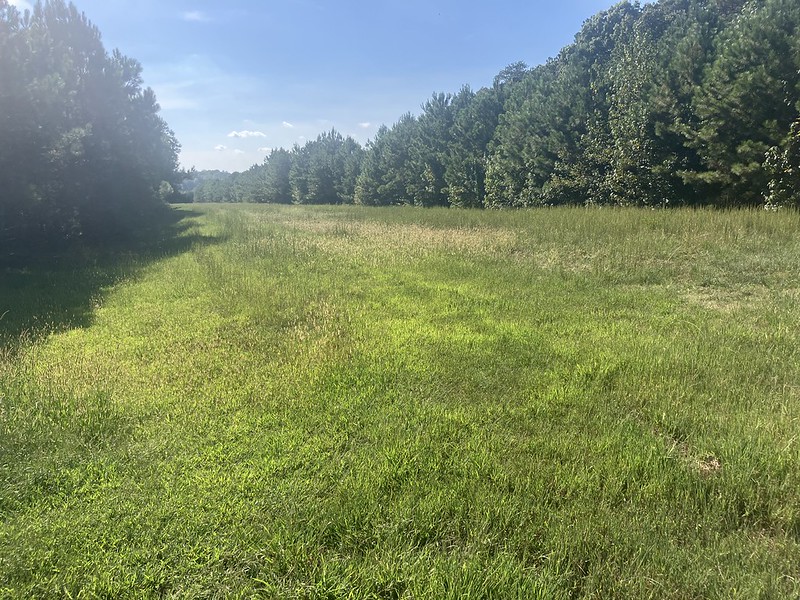
That is where West Hollow Cabin and The Meadow become more than the setting of a story.
They provide physical separation from the surroundings that continually reinforce the familiar routine.
A person—or two adults together—can reserve West Hollow for four hours, a full day, an overnight stay, or a weekend. They can walk, sit on the porch, read, write, talk, rest, or watch the light move across The Meadow.
Nothing requires them to produce a revelation.
The place does not supply an answer.
It creates enough distance for a neglected question to become audible.
The Reset Guide Provides a Process
Quiet by itself can be useful, but quiet does not always tell us what to do with what surfaces.
The Pencil-Driven Life Reset Guide offers structure without prescribing a conclusion. Its central question is:
What part of my life did I inherit, and what part am I ready to examine?
The guide helps a person move through three basic movements:
Notice. Question. Revise.
Notice what is happening now.
Question the beliefs, expectations, habits, and definitions beneath it.
Revise only what honest examination reveals no longer fits.
The revision may be small. It might be one boundary, one conversation, one changed habit, one unanswered question a person is finally willing to keep asking, or one decision not to make hurriedly.
West Hollow provides the place.
The Reset Guide provides the process.
The guest provides the life being examined.
Long-Term Housing Provides Something Different
Oak Hollow also includes two long-term residential possibilities: East Hollow and Oak Hollow Studio.
These are connected to the larger character of Oak Hollow, but they should not be confused with the West Hollow experience.
East Hollow is a simple, unconventional, off-grid residence. Oak Hollow Studio is a more conventional, fully serviced residence. Each offers a different way to live on a quiet rural property near Boaz.
Their primary purpose is housing.
A tenant does not have to use the Reset Guide, follow The Pencil-Driven Life, participate in Pencil Sessions, or treat the tenancy as a personal-development experience. A home should never become a test of whether a tenant accepts the landlord’s philosophy.
Still, housing affects how a person experiences daily life.
Where we live influences what we hear in the morning, what we see outside the window, how much privacy we have, how closely we live to the natural world, and what kind of rhythm becomes possible.
Someone may choose East Hollow because off-grid simplicity appeals to them. Someone else may choose Oak Hollow Studio because they want ordinary residential conveniences in a quieter rural setting. They may be looking for privacy, affordability, fewer distractions, natural surroundings, or simply a place that fits their present circumstances.
They do not have to explain the deeper meaning of that choice.
Sometimes a person needs a few hours away from ordinary life.
Sometimes a person needs a different place to live ordinary life.
Oak Hollow can make room for both.
What Connects These Different Offerings
West Hollow is a short-term place to step away.
East Hollow and Oak Hollow Studio are places to live.
One Honest Story provides recognition.
The Reset Guide provides questions and a pencil-driven practice.
An optional Pencil Session can provide a thoughtful conversation after someone has experienced West Hollow and discovered a question that deserves more attention.
These offerings are not identical, and they should not be forced into one program.
What connects them is something simpler:
They make room.
Room to walk.
Room to live.
Room to think.
Room to rest.
Room to notice the life taking place now.
Room to question an assumption that once seemed unquestionable.
Room to keep what still belongs and revise what no longer does.
A Needed Service Does Not Sell Itself
Believing that this work is valuable does not mean people will immediately understand it—or even know they need it.
Most people are not searching online for “permission to examine an inherited life.” They are searching for somewhere quiet, a cabin near Boaz, an affordable place to live, a break from their phone, a day without demands, or enough room to think about a decision.
We must meet people at the need they can already name.
Then, if they choose, the place and the process may help them see what lies underneath it.
That is why the invitation should remain plain.
Come for a walk.
Come for a quiet afternoon.
Come because you need time with someone important to you.
Come because you want to read, write, paint, rest, or sit beside a fire.
Consider East Hollow or Oak Hollow Studio because you need a long-term home and one of those residences may fit your life.
No one has to arrive seeking transformation.
Attention is enough for a beginning.
What Oak Hollow Is Really Offering
I no longer believe Oak Hollow has to become one single thing.
Its different uses can remain distinct while growing from the same respect for privacy, simplicity, honest attention, and the freedom to live without every hour being filled for us.
The Pencil-Driven Life does not offer a new script that everyone else must follow.
It offers a pencil.
West Hollow does not provide the answer.
It provides a place where the question may finally be heard.
The Reset Guide does not tell anyone what to conclude.
It helps a person examine what was inherited, recognize what remains true, and consider what may be ready for revision.
East Hollow and Oak Hollow Studio do not require a particular philosophy of life.
They provide homes in which tenants can live their own lives.
Perhaps that is the clearest way to describe the work:
A place, a process, and permission to pay attention.
The rest belongs to the person holding the pencil.
Continue with The Pencil’s Edge
If this reflection gave you something to sit with, here are three simple ways to continue.
A Pencil Practice
Draw three headings across a page:
What was handed to me
What still fits
What deserves examination
Choose one part of your life—work, faith, family, money, success, responsibility, technology, identity, or purpose.
Under the first heading, write one belief or expectation you inherited.
Under the second, name what remains honest and valuable.
Under the third, write one question you have been reluctant to ask.
Do not force a decision.
Complete this sentence:
I do not have to change this today, but I am willing to examine…
That is enough for one honest mark.
Listen
Short audio reflections from The Pencil’s Edge are available on the Audio Reflections page.
New audio reflections are added after each essay is published.
Listen to today’s Reflection on Spotify.
Subscribe
Receive new essays and short audio reflections from The Pencil-Driven Life when they are published.
No noise.
No pressure.
Just the next honest mark.

 The Pencil-Driven Life