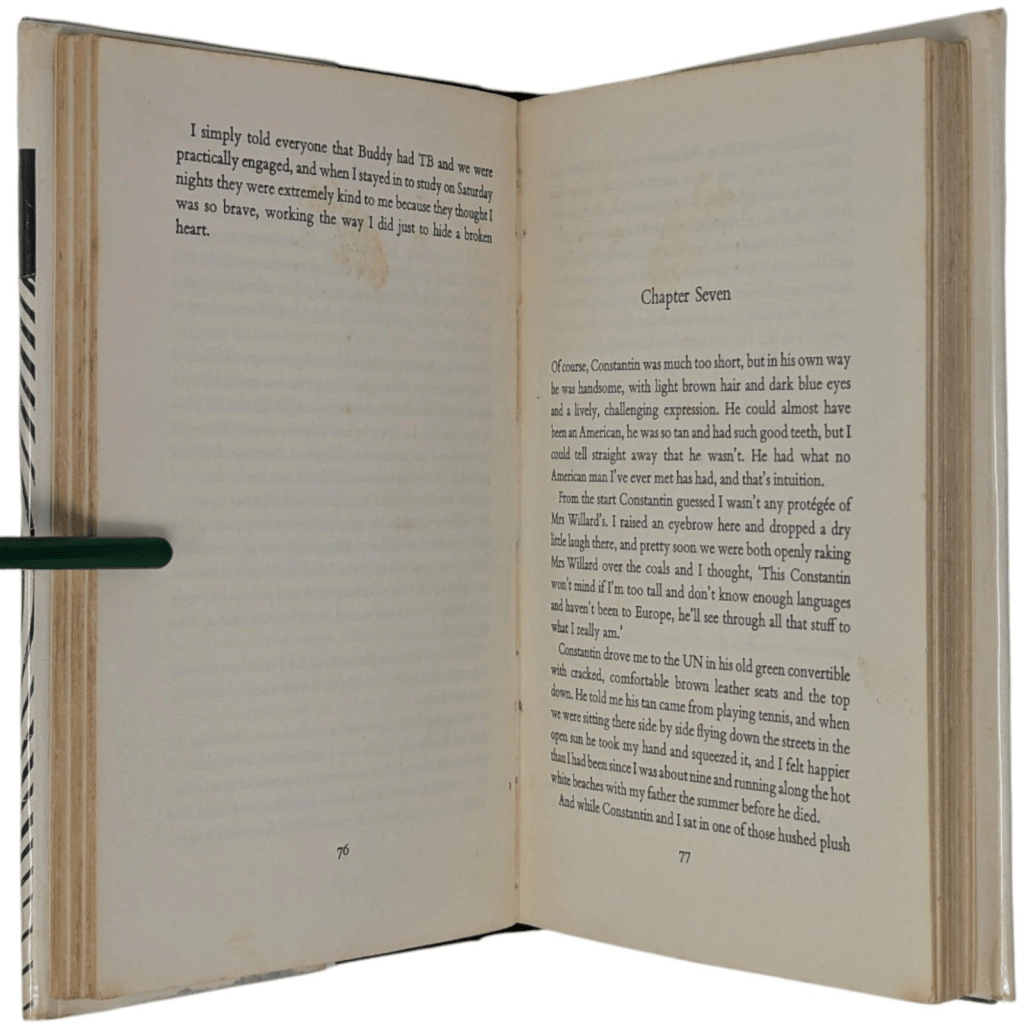
There are novels I barely remember.
I enjoyed them while I was reading them. I turned the last page, placed them back on the shelf, and eventually forgot almost everything about them.
Then there are other stories.
Years later, I can still picture a particular scene. I still remember a conversation between two characters. Sometimes I can even remember where I was sitting when I first read the book.
For a long time, I assumed that simply meant the novel was well written.
Now I’m not so sure.
I think the stories that remain with us do something more than entertain us.
They recognize us.
A good story does not merely tell us who its characters are. It quietly asks whether we recognize ourselves in them.
Perhaps that is why one reader is deeply moved by a particular novel while another shrugs and moves on. The difference is rarely the quality of the writing alone. It is whether the story has discovered something the reader has not yet put into words.
As a novelist, I think about this often.
As a StoryCoach, I see it from the other side of the desk.
Writers frequently worry about plot twists, pacing, dialogue, or structure. Those things matter. But readers seldom remember a story because the midpoint arrived on the correct page or the climax followed a textbook pattern.
They remember the moment they quietly thought,
“I’ve felt that.”
Or,
“I’ve known someone exactly like that.”
Or even,
“I don’t want to admit it, but that’s me.”
Recognition is what lingers.
Perhaps that is also why we return to certain books years later.
We are not simply rereading the story.
We are discovering whether we have changed since the last time it found us.
The older I become, the less interested I am in stories that merely distract me.
I am drawn instead to stories that help me see.
Not because they provide all the answers.
Because they ask better questions.
Maybe that has always been the deepest purpose of story.
Not to help us escape our lives.
But to return to them with clearer eyes.
Continue with The Pencil’s Edge
Some stories entertain us for an evening. Others quietly stay with us for years.
Today’s Pencil Practice is not about analyzing a favorite novel. It is about noticing why one particular story has continued walking beside you.
A Pencil Practice
Today, take five quiet minutes with a pencil and a page.
Write this sentence:
One story that has stayed with me is…
Then write:
I think it has stayed with me because…
Do not summarize the plot.
Do not explain why it is considered a great book.
Simply notice what truth that story continues to awaken in you.
Read your sentence one more time.
You may discover that what has stayed with you is not the story itself, but something the story helped you recognize about your own life.
That is enough for today.
Listen
Prefer listening?
Each essay is also available as a short Audio Reflection on The Pencil’s Edge podcast.
Subscribe
Receive new essays and short audio reflections from The Pencil-Driven Life when they are published.

 The Pencil-Driven Life